
Even before the Spanish colonization, Cebu already played a vital role in trade and commerce in Asia because the island has been gifted with a natural harbor. Its channel is deep enough to accommodate the flow of goods through international cargo sea vessels, and the Mactan island serves as protection from winds and current.
Cebu’s weather promises to be good for business because typhoon activities are minor and rainfall is evenly distributed throughout the year. Moreover, the island is not located within any earthquake belt, there is no known active volcano, and its international airport has been large enough to connect the island to several continents.
Cebu has at least nine economic zones that offer to cut bureaucratic red tape by providing a much easier system for investors, plus incentives.
It is number one because of good fiscal management: it ranks highest among the country’s provinces in terms of assets and cash in bank.
Most importantly, Cebu ranks number one because of the current unity that has never been seen before in any province: unity among elected officials, unity among business groups, unity among its people, and unity between the private and public sectors.
There are many universities and other educational institutions that serve as magnet to students from other provinces, a major factor of a highly skilled and efficient workforce in Cebu.
Overall, Cebu continues to excel and investors are drawn to Cebu because of the culture of professionalism and craftsmanship among its people, the vast highly skilled manpower resources resilient amid trying times, its fair weather, relative peace and business-friendly atmosphere.
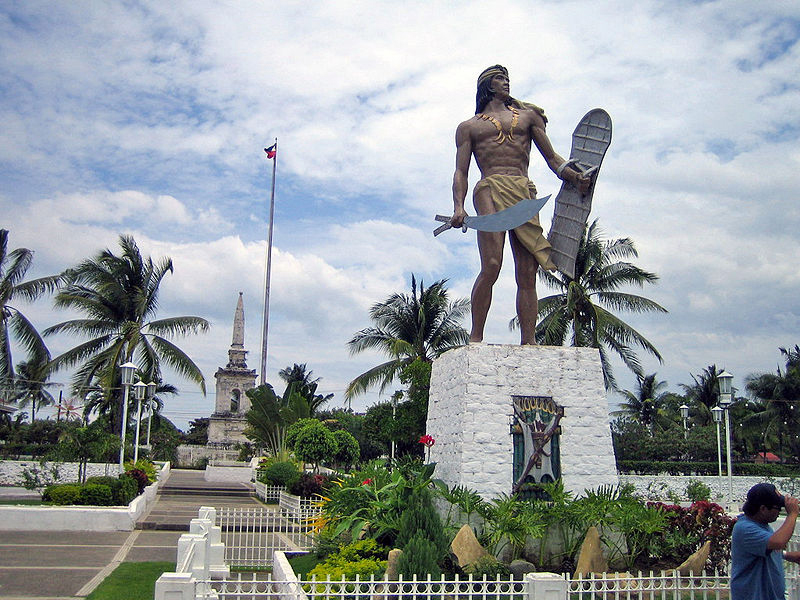
The history of Cebu goes way beyond 439 years ago when the island became a province at the start of the Spanish colonization.
Long before that, Cebu was already the center of trade of what is now the southern Philippines, dealing with traders from China, Malaysia, Japan, India, Burma and other parts of Asia.
Cebu had an organized social structure before the Spaniards came — with small groups headed by a datu who served as leader.
A datu governed his community, settled disputes, made decisions, protected his village from enemies, led them into battle, and received labor and tributes from his people. The position being both a political office and a social class, his authority was taken from his lineage.
A community ranged from 30 to 100 households grouped as a barangay and based mostly on kinship. Aside from the datu, there were free men called timawa and olipon. Spanish reports called the role of an olipon as dependent rather than a slave because of the absence of violence and harshness notable in European slavery.
People in Cebu then were called pintados because men were heavily tattooed. Lavish ornaments such as gold jewelry were used not only by women but also men.
Prior to Spanish colonization, there were already permanent townhouse-looking wooden structures where the datus lived. Ordinary people lived in field cottages or balay-balay that were on stilts. Hagdan (house ladder) was a common sight, with floors (salog) made of bamboo or wood and roof (atop) made of palm tree shingles.
Geography
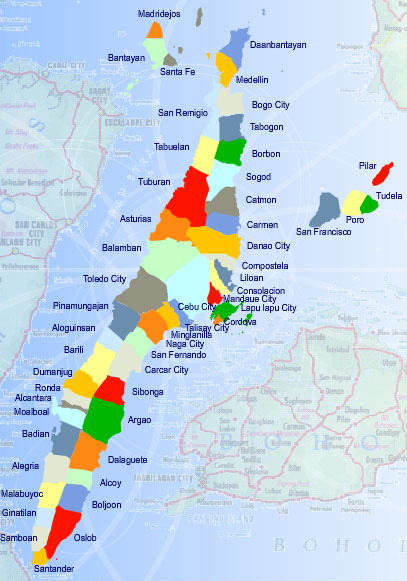
Cebu is located 365 miles south of Manila, the capital of Philippines. The province belongs to the country’s Central Visayas Region. It can be reached in an hour by air travel or 22 hours by cruising the sea.
Topography
Cebu is characterized by narrow coastlines, limestone plateaus, coastal plains but with predominant rolling hills and rugged mountain ranges traversing the northern and southern lengths of the island. Although Cebu’s steep mountains reach over 1,000 meters, the island lacks substantial forest cover. In the towns of Bogo, San Remigio, Medellin, and Daanbantayan at the northern tip of the province, considerable tracts of land are found. Of the three biggest islands, Mactan and Bantayan are relatively flat while Camotes is hilly.
Population/Language
Cebu Province has a total population of more than 3.85 million. Cebuano is the native tongue. While Filipino is commonly understood and spoken, the English language is widely used in business transactions and education.
 Cebu
Cebu 